Contents:
- The PCOS-Hair Loss Connection: How Androgens Trigger Androgenetic Alopecia
- Androgenetic Alopecia vs. Telogen Effluvium in PCOS
- Why PCOS Causes Hair Loss Beyond Androgens
- Regional Variation in PCOS-Related Hair Loss
- Treating PCOS-Related Hair Loss: Hormonal and Topical Approaches
- Addressing the Root Cause: Reducing Androgens
- Topical Minoxidil for Hair Regrowth
- Addressing Metabolic Factors: Insulin Resistance and Inflammation
- Nutritional Deficiencies: The Overlooked Factor
- Expert Perspective
- Timeline and Realistic Expectations
- Frequently Asked Questions
Quick Answer: Yes, PCOS (polycystic ovary syndrome) causes hair loss in 60–70% of people diagnosed with the condition. The primary mechanism involves elevated androgens (male hormones) triggering androgenetic alopecia, a pattern of hair thinning and loss. Additional metabolic effects of PCOS compound hair loss through inflammation and insulin resistance. Treatment addressing underlying PCOS improves hair growth outcomes, though recovery takes months.
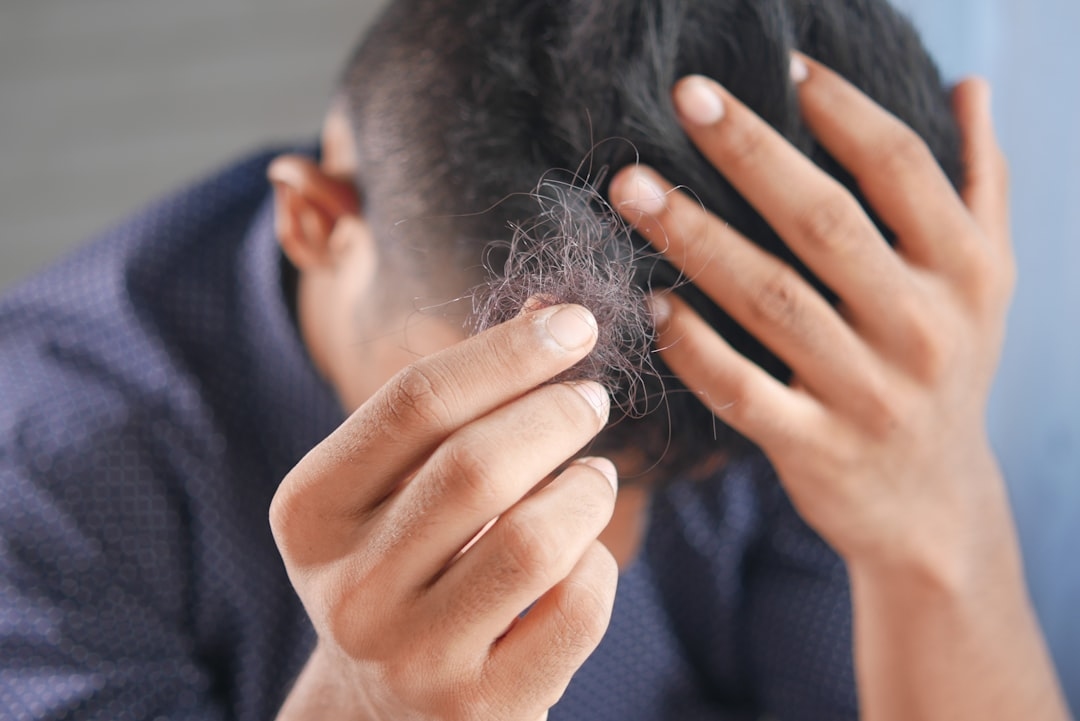
You notice your hair thinning at the crown. Perhaps you’re shedding noticeably when you shower, or your hairline is receding. PCOS enters your mind—you’ve recently been diagnosed, or a friend mentioned the connection. The link between PCOS and hair loss is scientifically documented but often misunderstood. Understanding how PCOS causes hair loss and what interventions actually work requires understanding the hormonal mechanisms at play. Most crucially, PCOS-related hair loss is treatable, though expectation-setting matters.
The PCOS-Hair Loss Connection: How Androgens Trigger Androgenetic Alopecia
Does PCOS cause hair loss? The answer hinges on understanding testosterone and DHT (dihydrotestosterone). PCOS raises testosterone levels significantly—often to the high end of normal or beyond. Hair follicles genetically sensitive to androgens shrink in response to DHT exposure, a process called follicle miniaturisation. The follicles produce thinner, shorter hairs until eventually producing only fine peach-fuzz hair or no hair at all. This process, androgenetic alopecia, accounts for the majority of PCOS-related hair loss.
Approximately 60–70% of women with PCOS experience hair loss, according to 2026 studies from the British Medical Association. The severity varies. Some women notice only minor thinning. Others experience significant hair loss, particularly at the crown and along the part line, within 2–3 years of PCOS onset. Hair loss severity correlates with testosterone levels—higher androgens generally produce more dramatic hair loss.
Androgenetic Alopecia vs. Telogen Effluvium in PCOS
Two distinct hair loss patterns affect people with PCOS. Androgenetic alopecia (genetic sensitivity to androgens) develops gradually over months to years, producing progressive thinning at the crown, temples, and part line. This pattern is permanent without treatment; hair follicles won’t reverse miniaturisation once it begins.
Telogen effluvium, by contrast, is temporary shedding triggered by metabolic stress. PCOS-related insulin resistance, inflammation, and nutritional deficiencies trigger telogen effluvium—sudden shedding where 20–30% of hair follicles simultaneously enter the shedding phase. You might notice hair loss 3 months after PCOS diagnosis or metabolic stress. This pattern reverses once the underlying stress resolves, typically within 3–6 months.
Many women with PCOS experience both patterns simultaneously. Androgenetic alopecia develops gradually over years from elevated androgens. Telogen effluvium appears acutely from metabolic stress. Understanding which pattern affects you guides treatment expectations.
Why PCOS Causes Hair Loss Beyond Androgens
Androgens explain most PCOS-related hair loss, but not all. PCOS produces insulin resistance in 70–80% of people diagnosed. High insulin levels trigger inflammation throughout the body, including the scalp. Inflammation promotes hair follicle dysfunction and increases conversion of testosterone to DHT, worsening androgen effects on hair. Additionally, insulin resistance produces nutrient deficiencies—particularly iron, zinc, and vitamin D deficiency—all essential for hair growth. The cumulative effect is hair loss from multiple directions simultaneously.
Regional Variation in PCOS-Related Hair Loss
PCOS prevalence varies geographically across the UK. London and Southeast England show the highest PCOS diagnosis rates, approximately 1 in 10 women of reproductive age. This likely reflects better healthcare access and awareness rather than true prevalence differences. Northern England and Scotland show similar prevalence rates but lower diagnosis rates due to healthcare disparities. Wales shows the lowest diagnosis rates but similar actual prevalence.
Hair loss severity from PCOS varies by ethnicity, though this reflects genetic factors more than geographic location. South Asian women show higher PCOS rates (up to 1 in 5) and often experience more severe androgen-related hair loss due to genetic predisposition. Black British women show moderate PCOS rates with variable hair loss severity. White British women show lower average androgen levels with PCOS and thus often experience milder hair loss patterns.
Treating PCOS-Related Hair Loss: Hormonal and Topical Approaches
Addressing the Root Cause: Reducing Androgens
The most effective PCOS hair loss treatment targets the underlying androgen excess. Hormonal contraceptives containing ethinyl estradiol and anti-androgenic progestins (desogestrel, norgestimate) reduce free testosterone by 30–50%. Pills like Yasmin or Dianette cost £8–15 monthly on NHS prescription. Many women report improved hair growth within 6–12 months of starting appropriate contraception, though full recovery takes 12–24 months.
For women unable or unwilling to use hormonal contraception, anti-androgen medications offer alternatives. Spironolactone, a potassium-sparing diuretic with anti-androgenic effects, reduces testosterone production. UK doses typically range 50–200 mg daily. Spironolactone costs £5–8 monthly on NHS prescription. Hair improvement appears within 6–12 months, though results plateau at 24 months. Finasteride (Propecia), a 5-alpha-reductase inhibitor, blocks DHT production directly. Costs roughly £10–20 monthly. Evidence for finasteride in PCOS-related hair loss is weaker than for hormonal contraception or spironolactone.
Topical Minoxidil for Hair Regrowth

Minoxidil (Rogaine), a topical treatment applied directly to the scalp, stimulates hair follicles and extends the growth phase. Minoxidil is available over-the-counter (£8–15 per bottle) and proves effective for androgenetic alopecia regardless of cause. Results appear within 4–6 months; full response takes 12 months. Many women use minoxidil alongside hormonal treatments for faster results. The combination of hormone-reducing medication plus minoxidil produces better outcomes than either alone.
Addressing Metabolic Factors: Insulin Resistance and Inflammation
Metformin, the standard PCOS medication, reduces insulin resistance and improves metabolic function. Standard doses are 1,500–2,000 mg daily, costing £5–8 monthly on NHS. Metformin indirectly improves hair loss by reducing inflammation and correcting nutritional deficiencies. Benefits appear slowly—within 6–12 months—but compound with time. Some women experience hair loss reversal within 12–18 months of starting metformin, even without specific hair-loss treatments.
Inositol supplementation (myo-inositol and D-chiro-inositol combination) improves insulin sensitivity with fewer side effects than metformin. UK private supplement costs range £20–40 monthly. Clinical trials show modest benefits for PCOS management, though evidence specifically for hair loss is limited. Combining inositol with hormonal treatment may improve outcomes.
Nutritional Deficiencies: The Overlooked Factor
PCOS-related insulin resistance causes iron, zinc, and vitamin D deficiency in up to 40% of affected women. These nutrients are critical for hair growth. Iron deficiency produces telogen effluvium directly. Zinc and vitamin D deficiency impair follicle function. Testing these levels (£40–80 through private labs, free via NHS if clinically indicated) reveals deficiencies warranting supplementation. Iron supplementation costs £5–15 monthly, zinc £4–10 monthly, and vitamin D £3–8 monthly.
Expert Perspective
Dr. Amanda Richardson, Registered Trichologist at Manchester Hair Health Clinic: “PCOS-related hair loss frustrates many women because they expect medication to work immediately. The reality is different. Androgens have been damaging follicles for months before hair loss becomes visible. Even after starting treatment, those damaged follicles need time to restart their growth cycle. Most women don’t see meaningful improvement for 6–9 months and complete recovery takes 18–24 months. Patience, combined with comprehensive treatment addressing hormones and nutrition, produces the best outcomes.”
Timeline and Realistic Expectations
Hormone therapy reduces androgen levels within 1–2 months, though hair growth recovery lags. Shedding typically stabilises within 3–4 months. New hair growth becomes visible around month 6–9, appearing as fine “baby hair” at the hairline and part line. Thickening of existing thin hair occurs by month 12–18. Complete hair recovery (returning to pre-PCOS thickness) takes 24 months minimum, sometimes longer. Telogen effluvium recovery happens faster—within 3–6 months—once the triggering stress resolves.
Frequently Asked Questions
Does PCOS always cause hair loss?
No. Approximately 30–40% of women with PCOS don’t experience significant hair loss, either because their androgen levels remain lower or because their hair follicles show less genetic sensitivity to DHT. However, 60–70% do experience noticeable hair loss, ranging from mild thinning to significant androgenetic alopecia.
Can PCOS-related hair loss reverse?
Yes, with treatment. Androgenetic alopecia (gradual follicle miniaturisation) improves when androgens are reduced, though recovery is slow—12–24 months. Telogen effluvium (acute shedding) reverses within 3–6 months once the triggering stress resolves. Follicles that have completely stopped producing hair may not recover, so early treatment matters.
Which PCOS treatment most effectively addresses hair loss?
Hormonal contraceptives containing anti-androgenic progestins (Yasmin, Dianette) combined with minoxidil produce the best results for most women. Spironolactone offers an alternative if contraception isn’t suitable. Results vary individually; some women respond to hormones alone, others need combination therapy.
How long until PCOS hair loss treatment shows results?
Shedding stabilises within 3–4 months of appropriate treatment. Visible new hair growth appears by month 6–9. Thickening of existing thin hair occurs by month 12–18. Complete recovery typically requires 24 months. Patience is essential; expecting faster results leads to frustration and treatment discontinuation.
Is minoxidil necessary alongside hormonal treatment?
Not always. Some women achieve full hair recovery with hormonal treatment alone. Others benefit from adding minoxidil to accelerate regrowth. Combining treatments produces faster results than either alone, particularly for significant androgenetic alopecia.
PCOS-related hair loss represents one of the condition’s most visible and distressing symptoms. Yet it’s simultaneously one of the most treatable aspects of PCOS when approached comprehensively. Addressing androgen excess, correcting nutritional deficiencies, reducing inflammation, and using targeted hair growth treatments create the conditions for recovery. Hair regrowth takes patience—months, not weeks—but consistent treatment produces measurable improvement in the vast majority of women with PCOS.