Contents:
- Topic unpacking: two treatments, two different goals
- History and context: how both treatments evolved for curly and textured hair
- Key aspects: comparing price, results and maintenance
- Price comparison
- Results comparison
- Maintenance requirements
- Comparison with a commonly confused alternative: keratin bonds vs keratin smoothing treatments
- Regional differences across the UK
- Expert insights: what stylists actually recommend
- Practical application: which one should you choose
- FAQ: keratin treatments and curly extensions
- Can I get a keratin treatment and curly extensions at the same time?
- Will a keratin treatment loosen my natural curl pattern permanently?
- Do curly hair extensions require different care products than straight extensions?
- Which option lasts longer for the money?
- Making the right decision for your hair
Trying to decide between a keratin treatment and curly hair extensions usually comes with a fair bit of frustration, mostly because the marketing around both treatments tends to promise similar outcomes — smoother, more manageable, more voluminous hair — without explaining that they solve completely different problems. One changes the texture of the hair you already have. The other adds hair that behaves however you choose. Getting that distinction clear from the start saves a lot of wasted money and disappointment.
Topic unpacking: two treatments, two different goals
A keratin treatment works by coating the hair shaft with a protein formula that’s then sealed in with heat, temporarily smoothing the cuticle and reducing frizz for roughly 8-12 weeks. Curly hair extensions, by contrast, add volume and length using hair textured to match the client’s curl pattern, without altering the natural hair at all. One is a chemical service applied to existing strands; the other is an addition made alongside them.
History and context: how both treatments evolved for curly and textured hair
Keratin smoothing treatments became widely available in UK salons through the 2010s, largely marketed towards straight and wavy hair types, which meant curly-haired clients were often given the same formula and timing without adjustments for their texture — sometimes with disappointing or overly relaxed results. Curly-specific extension techniques took longer to reach the mainstream market, since sourcing and matching genuinely curly human hair requires far more precision than straight hair, which can be more easily blended. By 2026, both services have matured considerably, with far more salons now offering formulas and extension textures specifically calibrated for type 3 and type 4 curl patterns.
Key aspects: comparing price, results and maintenance
Price comparison
A full keratin treatment price in London generally ranges from £150 to £350 depending on hair length and the formula used, with results lasting around three months before touch-ups are needed. Curly hair extensions typically start from £400 and can reach £800 or more for a full head of premium human hair, but the length and volume achieved is far more dramatic and immediate than anything a smoothing treatment can offer.
Results comparison
Keratin treatments reduce frizz and improve manageability but don’t add length or volume — curls remain curls, just with less frizz and easier styling. Extensions transform both length and volume instantly, and for clients specifically wanting more visible curl definition or length, extensions deliver a result keratin treatments simply cannot replicate.
Maintenance requirements
Keratin treatments fade gradually and require reapplication every 2-3 months, with the in-between period sometimes showing uneven results as the treatment wears off unevenly. Extensions need a move-up appointment roughly every 6-8 weeks as natural hair grows, but the extensions themselves can often be reused across multiple move-up sessions if properly cared for.
Comparison with a commonly confused alternative: keratin bonds vs keratin smoothing treatments
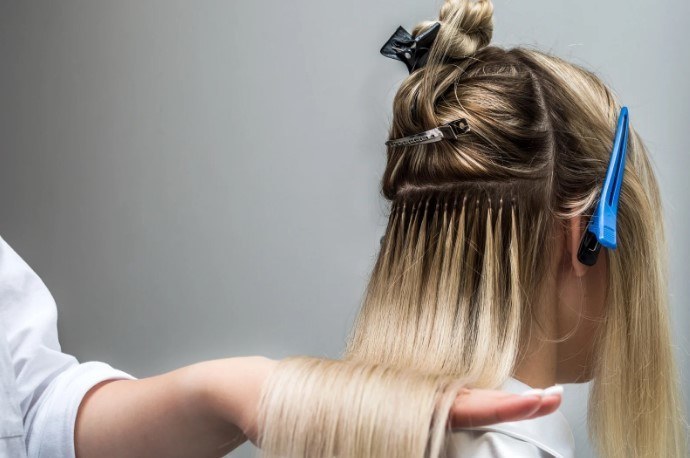
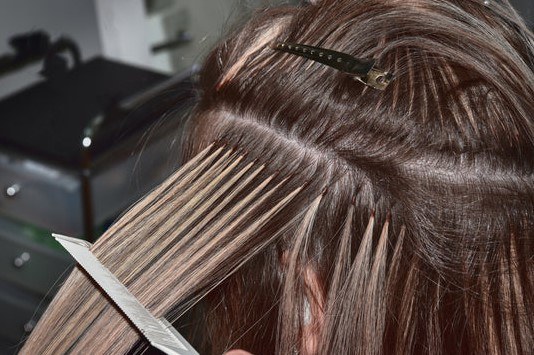
These two services share a name but do entirely different jobs, and the confusion causes real disappointment for clients who book the wrong one. A keratin smoothing treatment is a chemical service that changes the texture of natural hair. Keratin bonds, sometimes called fusion or pre-bonded extensions, use keratin as an adhesive to attach individual strands of extension hair to natural hair — no chemical smoothing involved at all. Booking a “keratin” appointment without checking which service is meant is one of the most common mix-ups in the industry.
Regional differences across the UK
Demand and expertise for curl-specific extension work is noticeably concentrated in London, where salons like hair extension london specialist Ivana Farisei have built genuine expertise in sourcing and matching textured hair. Salons in the North of England and Scotland often have a smaller pool of technicians trained specifically in curly and coily extension application, meaning clients in those regions sometimes travel to London or book with mobile specialists rather than relying on their local high street salon for this particular service.
Expert insights: what stylists actually recommend
At Ivana Farisei, consultations for curly-haired clients start with a curl pattern assessment before any treatment or extension option is even discussed, which is precisely the kind of groundwork that prevents the keratin-versus-extensions confusion in the first place.
Stylists who work regularly with curly and textured hair tend to recommend against keratin smoothing treatments for clients who want to keep their natural curl pattern, since even “curl-friendly” formulas relax the curl to some degree. For clients wanting to preserve their texture while still adding length or fullness, extensions matched precisely to the client’s curl pattern are the more reliable route, provided the salon has genuine experience sourcing that specific hair type.
Practical application: which one should you choose
If your main frustration is frizz and manageability but you’re happy with your current length and volume, a keratin smoothing treatment is the more cost-effective option. If you want more length, more volume, or you’re growing out a shorter cut and don’t want to wait, curly hair extensions uk specialists are the better investment. Many clients at Ivana Farisei actually combine both over time — extensions for length and volume, with occasional smoothing treatments on their natural hair between extension appointments for easier daily styling.
This is exactly the kind of combined approach Ivana Farisei is known for, treating the two services as complementary rather than competing options within the same hair care routine.
FAQ: keratin treatments and curly extensions
Can I get a keratin treatment and curly extensions at the same time?
It’s generally best to space them out, since the extensions need to be attached to natural hair that hasn’t just been chemically treated, to ensure the bonds hold properly.
Will a keratin treatment loosen my natural curl pattern permanently?
No, the effect is temporary and fades over 8-12 weeks, after which your natural curl pattern returns as the treatment grows out.
Do curly hair extensions require different care products than straight extensions?
Yes, curl-specific extensions typically need moisture-focused products and less frequent brushing to maintain the curl pattern without causing frizz or tangling.
Which option lasts longer for the money?
Extensions generally offer better long-term value since the hair itself can be reused across multiple maintenance appointments, whereas keratin treatments require full reapplication each time.
Making the right decision for your hair
The choice ultimately comes down to what problem you’re trying to solve. Keratin treatments manage texture on the hair you already have, while curly hair extensions add length and volume without touching your natural curl pattern at all — and understanding that difference before booking saves both money and disappointment.

Add Comment